The Paradigm Shift in Data Center Thermal Management: The Rise of Immersion Cooling
The exponential growth of artificial intelligence (AI), machine learning (ML), high-performance computing (HPC), and 5G telecommunications has fundamentally transformed data center architecture. As modern enterprise accelerators and multi-core processors—such as NVIDIA Blackwell and Hopper GPUs or custom ASICs—push thermal design power (TDP) per socket well beyond 700W to over 1200W, traditional air cooling has reached its physical thermodynamic limits. Even advanced direct-to-chip liquid cooling (DLC) loops face formidable architectural challenges when managing heat flux densities exceeding 100 W/cm².
Consequently, single-phase and two-phase direct immersion cooling has evolved from an experimental niche into an industrial imperative. By submerging entire server blades, computing modules, power supplies, and busbars into non-conductive dielectric fluids (including engineered perfluoropolyethers [PFPE], fluorochemicals, polyalphaolefins [PAO], and synthetic isoparaffinic hydrocarbons), data center operators achieve Power Usage Effectiveness (PUE) ratings below 1.05 while eliminating noisy, power-hungry chassis fans.
However, operating submerged hardware indefinitely inside chemical coolants introduces severe material compatibility and mechanical reliability demands. Among the most vulnerable failure points in any liquid or immersion cooling topology are the elastomeric seals: O-rings, manifold flat gaskets, blind-mate quick-disconnect couplings (QDC), cable gland pass-throughs, and tank access lid seals. If an elastomer degrades, leaches plasticizers, swells excessively, or loses its elastic rebound, the results are catastrophic—ranging from expensive dielectric fluid leakage to micro-contamination of optical transceivers and electrical short-circuits.
Δ
Ultra-Low Compression Set
Maintains >80% original sealing force after 5,000+ hours at 120°C in dielectric fluid, preventing micro-gaps and joint seepage under continuous vibration.
Ψ
Zero Leachate & Low Extractables
Specialized curing systems eliminate plasticizer migration, preserving fluid dielectric breakdown voltage (>45 kV) and preventing surface residue on microchips.
Φ
Universal Fluid Compatibility
Engineered for extreme stability across PFPE fluids (Fluocon®, ChipChill®), synthetic hydrocarbons, PAO, and dielectric fluorochemicals with <3% volume swell.
Why Compression Set is the Decisive Factor in Long-Term Immersion Reliability
Compression set is defined as the permanent deformation remaining in an elastomer after the compressive force applied to it is released. In data center cooling environments, elastomeric seals are constantly compressed inside CNC-machined grooves across cold plates, distribution manifolds, pump housings, and tank perimeter flanges. Over operational lifetimes expected to span 10 to 15 years, these seals undergo severe thermodynamic stressors: sustained clamping pressure, elevated operating temperatures (60°C to 125°C), and continuous immersion in organic or fluorinated dielectric compounds.
When an elastomer exhibits a high compression set, its molecular crosslinks rupture and reform in a strained conformation. Over time, the seal loses its elastic recovery stress ("sealing force"). In an immersion cooling system, this leads to three primary failure modes:
-
Micro-Leakage and Dielectric Loss: Synthetic dielectric coolants, particularly low-viscosity fluorochemicals and PFPEs, have exceptionally low surface tension (often <16 mN/m). They rapidly permeate past degraded seals that have lost elastic contact pressure, leading to fluid loss and costly replenishment overhead.
-
Air and Moisture Ingress: In single-phase sealed immersion tanks and closed-loop liquid distribution units (CDUs), losing sealing resilience allows ambient moisture to penetrate. Even trace moisture content (>50 ppm) drastically diminishes the dielectric breakdown strength of the coolant, risking electrical arcing.
-
Contamination from Extracted Oligomers: Inferior rubber grades subjected to compression set often undergo chemical plasticizer extraction, contaminating cooling fluids and creating insulating films over high-speed PCB traces, PCIe connectors, and optical transceivers.
Key Engineering Benchmark: While standard industrial elastomers (such as standard EPDM, NBR, or generic silicone) exhibit compression sets exceeding 40-60% after 1,000 hours in synthetic fluids at 100°C, Kingrande's specialized Low Compression Set FKM compounds sustain compression sets below 12% to 18% under identical ASTM D395 Method B test parameters, ensuring a true 15-year maintenance-free lifecycle.
Material Science: Bisphenol vs. Peroxide-Cured FKM in Coolant Ecosystems
Fluoroelastomers (FKM) derive their heat and chemical resistance from the exceptionally strong Carbon-Fluorine (C-F) bond along their polymer backbone. However, the specific crosslinking mechanism and monomer composition heavily dictate an FKM’s performance in immersion thermal management.
1. Bisphenol-Cured Copolymer and Terpolymer FKM
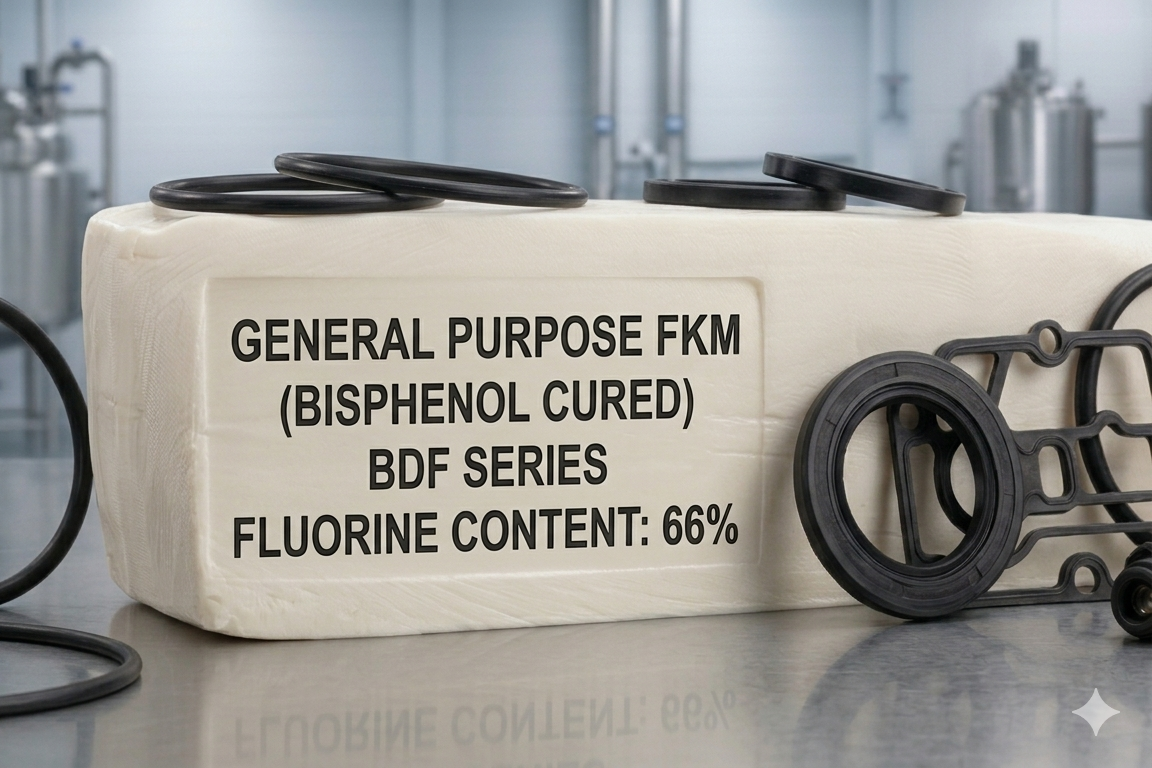
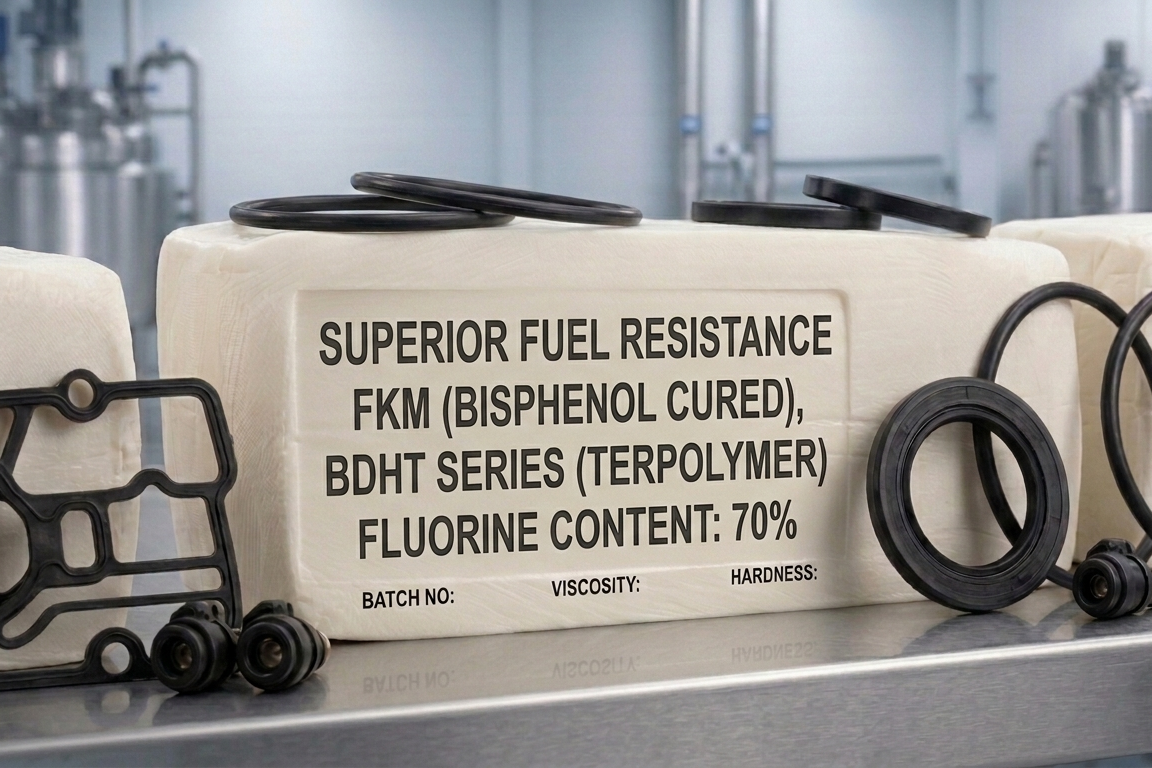
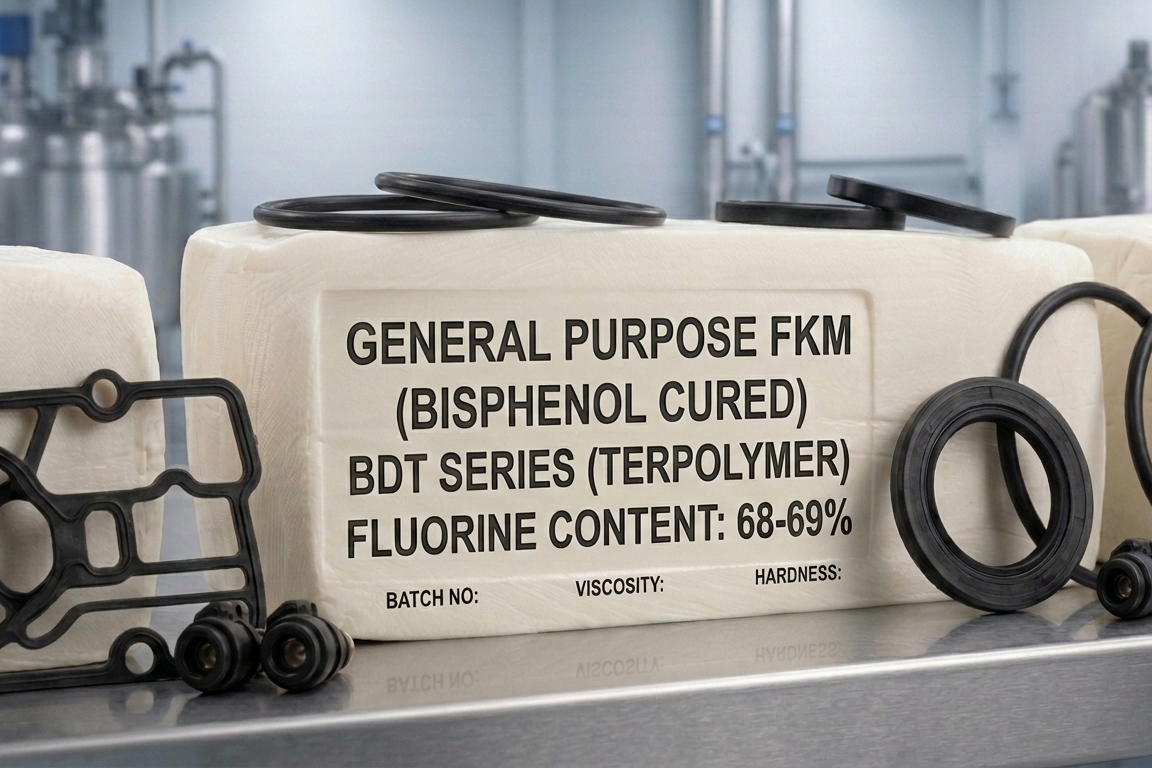
Bisphenol curing systems (such as Kingrande’s BDF and BDT series) produce ionic crosslinks that yield outstanding initial mechanical strength, superior tear resistance, and exceptionally low compression set at moderate to high temperatures. They represent the most cost-effective sealing solution for CDU circulation manifolds, external heat exchangers, and secondary-loop distribution piping where synthetic hydrocarbons or standard dielectric oils are utilized.
2. Peroxide-Cured (Free-Radical) FKM Formulations
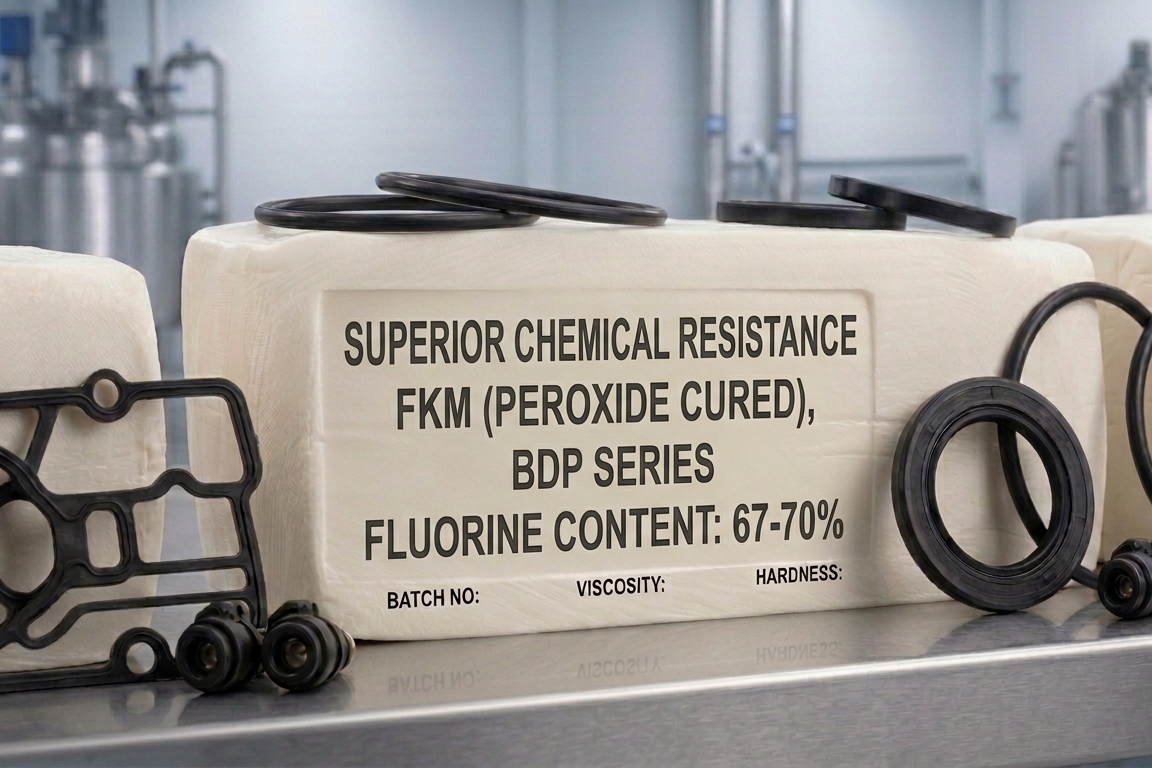
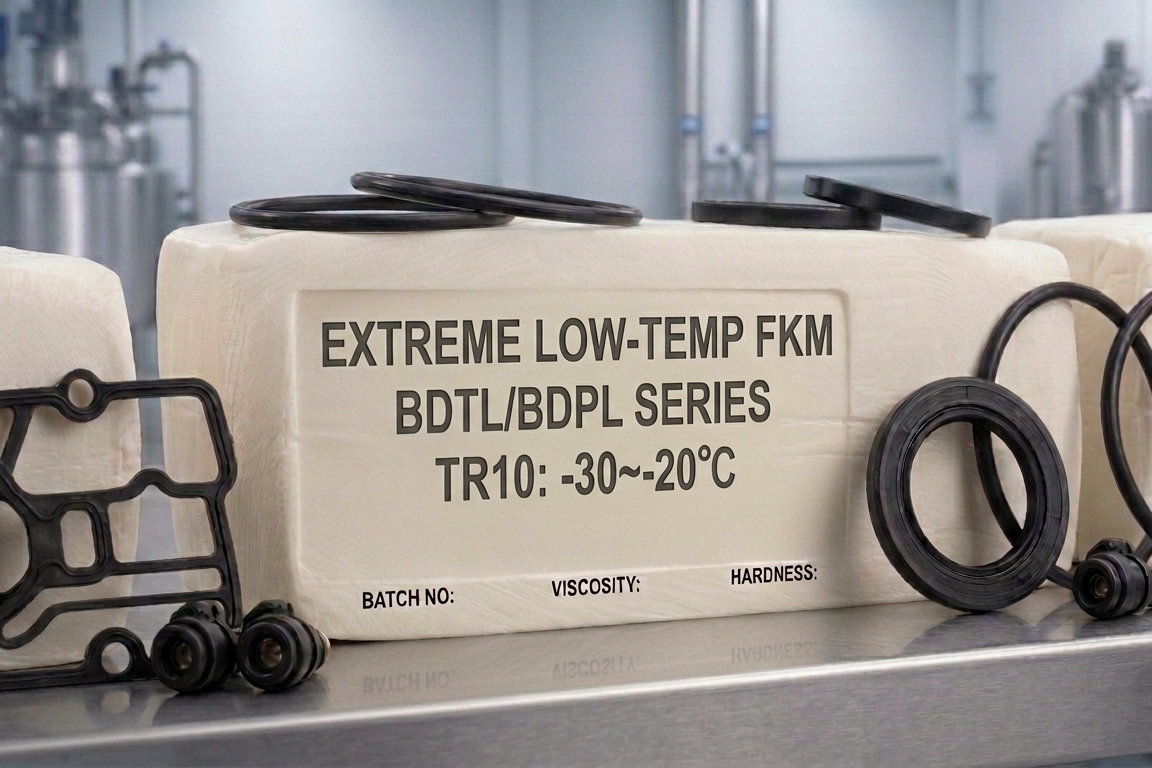
For high-end immersion cooling architectures utilizing aggressive fluorinated chemicals, specialized PFPEs (such as Kingrande's Fluocon® PFPE series or ChipChill® fluids), and aggressive cleaning solvents, peroxide-cured FKM (such as Kingrande’s BDP series) is the gold standard. C-C covalent bonds formed via peroxide crosslinking provide near-universal chemical inertness, zero acid-acceptor leaching, and phenomenal resistance to volume swell.
| Elastomer Class |
Compression Set (1000h @ 100°C) |
Volume Swell in PFPE / Dielectric Fluid |
Dielectric Breakdown Preservation |
Expected Service Life |
| Kingrande Low Compression Set FKM (Peroxide) |
< 14% |
< 2.5% (Negligible) |
Excellent (>99.5%) |
12 – 15+ Years |
| Kingrande Bisphenol-Cured FKM |
< 16% |
< 4.0% |
Excellent (>98.5%) |
10 – 12 Years |
| Standard Commercial FKM |
28% – 45% |
6.0% – 12.0% |
Moderate (Leachate risk) |
3 – 5 Years |
| EPDM Rubber |
35% – 50% |
> 25% (High Swell) |
Poor (Rapid degradation) |
< 1 Year |
| Standard Silicone (VMQ) |
40% – 65% |
> 30% (High absorption) |
Poor (Siloxane migration) |
< 2 Years |
Deep-Dive Application Scenarios in Modern AI Data Centers
1. Direct-to-Chip (DLC) Cold Plate Perimeter Gaskets
In direct liquid cooling systems, micro-channel cold plates fabricated from nickel-plated copper are mounted directly onto high-heat silicon dies. Sealing the micro-channel lid requires precision micro-molded FKM gaskets. The FKM material must exhibit zero creep under fluctuating heat-sink clamp loads and maintain resilience across severe cold-start to peak-load thermal cycles (15°C to 105°C).
2. Quick Disconnect Couplings (QDC) & Blind-Mate Connectors
QDCs allow server nodes to be hot-swapped without draining coolant loops. The internal O-rings within male and female coupling halves endure repetitive insertion friction, fluid shear, and static pressure. Low compression set FKM compounds prevent O-ring flattening and extrusion, guaranteeing drip-free disconnects even after hundreds of mating cycles.
3. Immersion Tank Top Covers & Vapor-Phase Gaskets
In two-phase immersion tanks, fluorinated fluids boil at low temperatures (e.g., 50°C), producing vapor that condenses on top-mounted condenser coils. The tank perimeter gasket must establish an absolute hermetic seal to avoid vapor escape. Peroxide-cured low compression set FKM offers the impermeable barrier required to prevent costly coolant loss into the data hall atmosphere.
4. Coolant Distribution Units (CDUs) & Heavy-Duty Pumping Skids
CDUs regulate fluid flow, temperature, and filtration across thousands of server nodes. Pump mechanical seals, flow meter O-rings, and brazed plate heat exchanger gaskets molded from Kingrande FKM withstand high fluid velocities, cavitation stresses, and broad differential pressures without loss of sealing force.
Total Cost of Ownership (TCO) and Sustainability Implications
While the initial cost of high-purity, low compression set FKM is slightly higher than standard commercial rubber grades, the return on investment (ROI) across data center infrastructure is enormous:
-
Eliminating Unscheduled Server Outages: Replacing a single leaking seal in an immersion rack requires draining hundred of liters of coolant, taking 40 to 80 high-value GPU blades offline, and risking thousands of dollars per minute in compute downtime.
-
Preventing Coolant Fluid Loss: Engineered dielectric fluids cost between $30 and $120 per kilogram. Low compression set FKM prevents slow micro-evaporative loss, saving tens of thousands of dollars annually per megawatt of compute.
-
Decarbonization and PUE Optimization: By ensuring zero fluid leakage and minimal pumping resistance through optimal manifold geometry, robust sealing enables hyperscale facilities to reliably maintain PUEs < 1.05, contributing directly to enterprise ESG and net-zero targets.